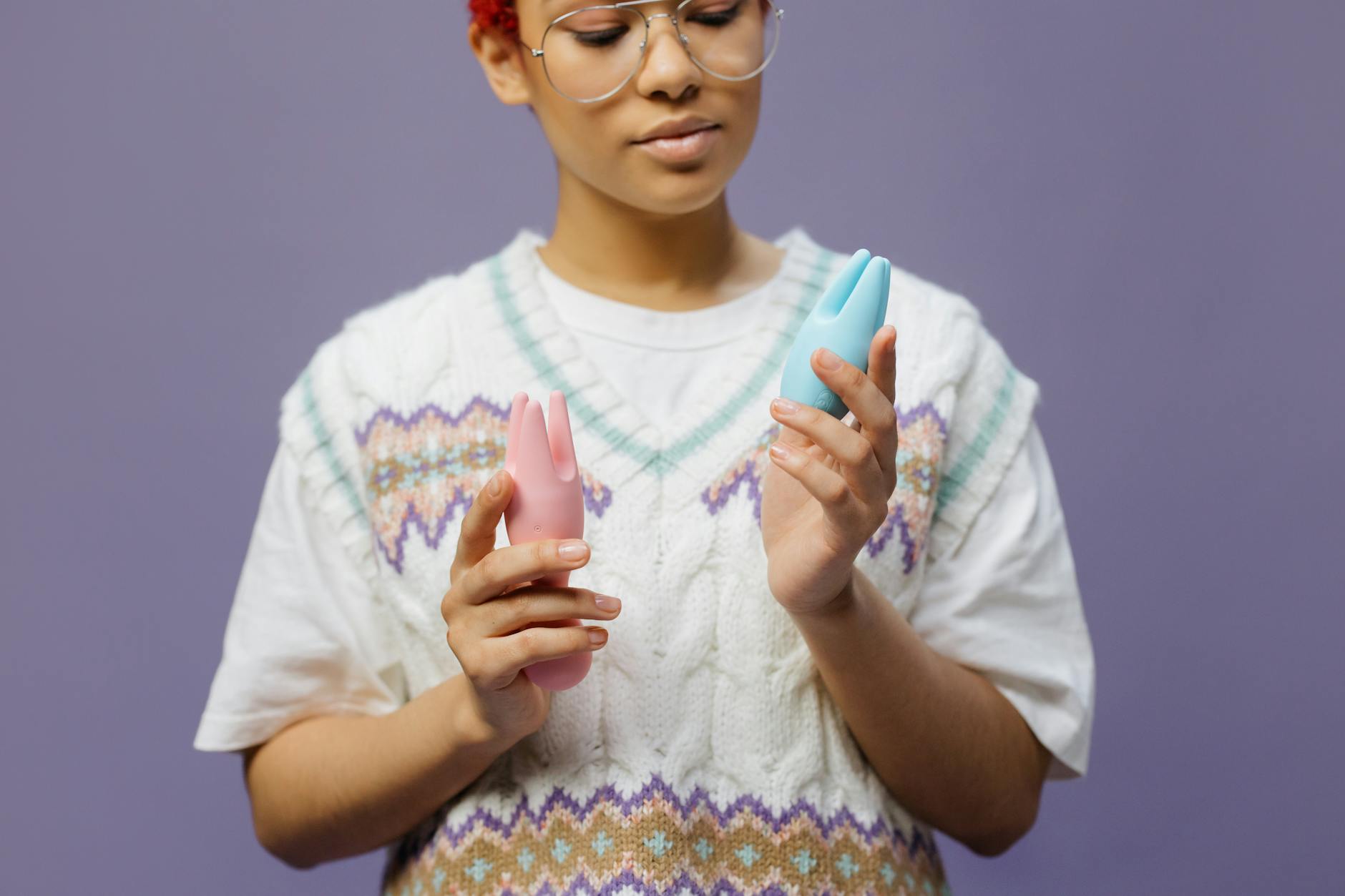
Here's what nobody tells you about perimenopause and touch
Your clitoris is sensitive to hormonal shifts. Not in the vague wellness sense, but in the literal, measurable, sometimes frustrating way that changes how stimulation feels month to month. Perimenopause takes that hormonal variability and amplifies it. One week your clitoris wants light, fast patterns. The next week, nothing registers until you turn the intensity all the way up. Both versions of you are normal. Both versions deserve pleasure that works.
Lemon vibrators, with their range of suction intensities and pattern options, are genuinely helpful during this transition. But using them well during perimenopause means understanding what's actually happening in your body, then matching your tool to your current baseline.
What perimenopause does to clitoral sensation
During perimenopause, your estrogen and progesterone don't decline steadily. They fluctuate wildly, sometimes across the span of a week. This affects three things about how your clitoris responds to stimulation.
Tissue thickness and blood flow. Rising estrogen thickens the tissue around your clitoris and increases local blood flow, making it more responsive. Dropping estrogen thins the tissue slightly and reduces engorgement, making it less reactive to touch. You're not imagining the difference. Your body is literally changing.
Nerve sensitivity. Hormones modulate neurotransmitters that affect sensory perception. Higher estrogen generally increases clitoral sensitivity. Lower estrogen can blunt it. Some people find that mid-cycle (high estrogen) they need softer stimulation, and during the luteal phase (higher progesterone) they want more intensity. Others experience the opposite.
Arousal speed. Perimenopause often lengthens the time it takes to become aroused, even if final sensation remains strong once you're there. This is partly hormonal and partly neurological. It's not a sign anything is broken.
How to track your own pattern
Here's what I recommend: keep a one-line note for two months.
After you use a lemon vibrator (or any clitoral vibrator), jot down the date, which intensity setting felt best, and how quickly arousal built. If you menstruate, mark your cycle phase. If you don't, note the date anyway.
Within four to six weeks, you'll see your own rhythm. Maybe high intensity feels better in week two of your cycle. Maybe you need a longer warm-up in week three. Maybe your sensitivity is genuinely random, which is also useful information because it stops you from blaming yourself.
Once you know your pattern, you can anticipate what your body will want instead of discovering it mid-session.
Using intensity settings strategically
The Lem vibrator has five distinct intensity levels. During perimenopause, I suggest thinking about them not as "low, medium, high" but as tools for different phases of sensation.
Levels 1-2: Warm-up and discovery. These are your entry points on low-estrogen days or when arousal feels distant. Spend 10 to 15 minutes here. Your clitoris will gradually engorge and become more responsive. Resist the urge to jump to higher intensity. That slower engagement often leads to stronger orgasms.
Levels 3-4: Your current baseline. On days when sensitivity is normal, these levels usually produce reliable pleasure. Most people find their sweet spot lives here. If you're jumping to level 5 every single time, you might benefit from backing off slightly on high-estrogen weeks to let your nervous system recalibrate.
Level 5: High-sensitivity days only. Some people think this level exists for every session. It doesn't. Using maximum intensity when your body is already highly sensitive can actually dull sensation long-term (a phenomenon called desensitization). Save level 5 for the 2-3 days per cycle when lower settings feel ineffective.
Pattern switching during perimenopause
The Lem has three suction patterns plus steady suction. During perimenopause, your preferences for these patterns may shift with your cycle too.
If you find one pattern that always works, use that on days when sensitivity is unpredictable. Once you know your baseline is stable, experiment with the other patterns on high-estrogen weeks when your clitoris is more forgiving of novelty.
Many people report that the steady suction (pattern one) feels most reliable during the low-estrogen phases of perimenopause, while the more rhythmic patterns feel better when sensation is stronger.
Lubrication changes and what they mean
Vaginal lubrication often decreases during perimenopause, even before full menopause arrives. Your clitoris is external tissue, so this doesn't directly affect how the vibrator feels. But if you're using a lemon vibrator while also having partnered sex or internal stimulation, reduced lubrication can affect overall comfort and arousal ease.
Use water-based lubricant freely. It doesn't mean your body is broken. It means your hormones are shifting, and adding lubrication is a practical solution that takes about five seconds and works immediately.
When sensitivity shifts happen fast
Sometimes perimenopause throws an unexpected curve. Your sensitivity was stable Tuesday. Wednesday morning it feels completely different. This is infuriating and also completely normal.
On those days, start at intensity level 2 instead of your usual level. You can always turn it up. Finding out mid-session that you've started too high and now your clitoris feels raw is a frustration you can avoid. Give yourself 15 to 20 minutes to acclimate before assuming your usual settings won't work.
If you're in a sustained multi-week period of high or low sensitivity that doesn't match your cycle phase, mention it to your doctor. Thyroid issues and other medical conditions can cause sensation changes that look like perimenopause but aren't.
Using lemon vibrators with a partner during this phase
If you're with a partner, communication becomes more important because your needs are changing faster than usual. Instead of "I want it rougher" or "That's too much," try "My sensitivity is lower this week, so I'm starting at level 3" or "Let's use steady suction instead of patterns today."
This removes the emotional charge from "your body isn't responsive enough." It's just data: hormones are shifting, so tool settings shift too. Your partner isn't causing the change, and neither are you. You're both adapting.
If your partner has difficulty accepting these changes, that's a different conversation. But in terms of using a lemon vibrator effectively with someone else present, treating sensation shifts as practical adjustments (not rejections) keeps sex playful instead of stressful.
The mental layer you can't ignore
Here's what I see clinically: perimenopause doesn't just change your clitoris. It changes your mindset about your body. You might start questioning whether pleasure is even possible anymore. You might feel embarrassed that you need different settings than you did at 28. You might wonder if this is the beginning of permanent change.
It's not. Perimenopause is a transition, not a verdict. Your capacity for pleasure isn't declining. It's evolving. And that evolution is often richer than what came before, once you stop fighting it.
Using a lemon vibrator during this phase is partly about the vibrator. It's also about staying curious about your body instead of angry at it. Every time you adjust settings and find what works that week, you're gathering information. You're not failing.
FAQ
How often should I use a lemon vibrator during perimenopause?
As often as you want. Perimenopause doesn't make vibrator use less safe. If anything, consistent use helps you stay aware of your sensitivity baseline and catch unexpected shifts early. Solo use is great for this because there's zero pressure and you can adjust instantly.
Does using a lemon vibrator during perimenopause make sensitivity worse long-term?
No. Vibrators don't cause desensitization when used thoughtfully. Starting with lower intensity on low-sensitivity days and avoiding level 5 as your default actually helps protect long-term sensation by not overworking your nervous system.
Can I use the same lemon clitoral vibrator settings as I did before perimenopause?
Maybe, but probably not consistently. Your current settings might work great some weeks and feel wrong others. Flexibility beats routine during this phase. Test your old settings each time, be willing to adjust, and don't assume one "right" configuration exists anymore.
What if my sensitivity is low during perimenopause but my partner wants sex?
Have the conversation outside the bedroom. Tell them: my clitoris is currently in a low-sensitivity phase, which is hormonal, not about attraction. Here's what helps: longer foreplay, or using a lemon vibrator, or a position that lets me have control of rhythm. Make it collaborative instead of making it mean something about the relationship.
Should I try a different type of vibrator during perimenopause?
Not necessarily. Lemon vibrators are excellent for perimenopause because the suction mechanism works differently than standard vibration, and the intensity range lets you fine-tune to your current baseline. That said, if you find steady suction isn't registering, you might try a pattern-heavy vibrator on high-estrogen weeks as an experiment. But most people find one good tool that adapts to their changes is better than rotating between several.
How do I know if low sensitivity during perimenopause is normal or a sign of something else?
Normal perimenopause sensitivity shifts follow roughly your menstrual cycle, even if that cycle is becoming irregular. They tend to improve slightly when estrogen rises. If sensitivity is low all month, doesn't follow any pattern, or comes with other symptoms like fatigue or mood shifts, check with your doctor. Thyroid issues, depression, certain medications, and other conditions can mimic perimenopause symptoms but need different treatment.
Your clitoris is not disappearing. It's just asking for a conversation with your body about what works now. A lemon vibrator is a tool that makes that conversation easier because it gives you precise control and enough range to meet yourself where you actually are, not where you think you should be.
If you're navigating perimenopause and feeling confused about pleasure, that's the exact moment to get curious instead of discouraged. Your body is still capable. It's just speaking a new dialect.
If you'd like support working through this phase, whether solo or with a partner, I'm here to talk through it. Reach out.